Household Savings for Pavlohrad: How to Give Pickle Brine a Second Life
Experts shared effective ways to reuse marinade in cooking and for solving common household problems.
 🏙️City
Photo: UNIAN
Key points
- Brine serves as a base for tangy sauces and salad dressings.
- The liquid is suitable for re-marinating vegetables and boiled eggs.
- The acetic acid content helps effectively remove limescale from plumbing fixtures.
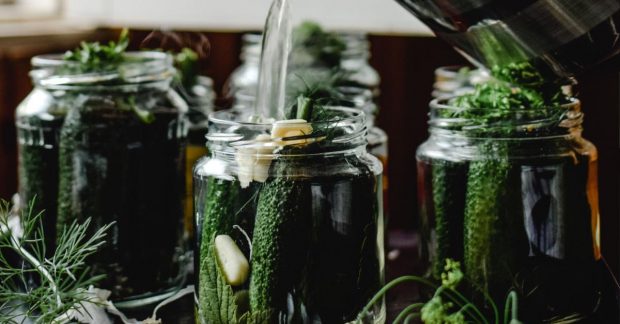
In Pavlohrad, where home canning traditions are passed down through generations, the rational use of food products remains a constant priority. Once the last pickle is gone from the jar, most residents are accustomed to simply pouring the remaining liquid down the drain. However, as reported by Chip, pickle brine is not just waste but a valuable resource that can find applications in both cooking and household maintenance.
Culinary Hacks for the Home Kitchen
First and foremost, the marinade is an ideal component for preparing various dressings. Thanks to its vinegar and spice content, it can add tanginess to potato, pasta, or leaf salads. Experts suggest combining the brine with a small amount of oil, yogurt, or mustard, allowing for the creation of complex sauces without the need for extra salt or seasonings.
Beyond dressings, the liquid is excellent for marinating other products. For instance, it can be used to soak sliced onions, garlic, or even boiled eggs, giving them a unique flavor profile. Brine can also be used to deglaze pans or thin out thick gravies during meat frying, adding a subtle acidic note. The golden rule is to add the liquid sparingly to avoid overpowering the dish's primary aroma.
Household Uses and Expert Advice
Pickle brine can be equally useful outside the kitchen. Due to its acetic acid content, it can effectively combat light limescale deposits. This is particularly relevant for households dealing with hard water issues. A scaled-up faucet or its removable aerator can be submerged in the solution for a short time and then thoroughly rinsed with clean water.
"To remove limescale, the Consumer Protection Center generally recommends using organic acids, such as acetic or citric acid," the experts noted.
This approach serves as an eco-friendly alternative to harsh chemical descalers. Utilizing preservation leftovers not only saves money on store-bought sauces or household chemicals but also significantly reduces domestic waste.
Source UNIAN — unian.ua/curiosities/navishcho-zberigati-rozsil-pislya-ogirkiv-eksp… ↗
Read next
 🇺🇦Ukraine
Arctic blast: severe frost heading towards neighboring countries and Ukraine
Meteorologists forecast a sharp drop in temperatures across Central Europe and Ukraine by the end of November, with lows potentially reaching -20°C.
 🧠AI Analysis
New Nuclear Blackmail from the Kremlin: Medvedev Threatens Preemptive Strike
Deputy Chairman of the Russian Security Council Dmitry Medvedev has voiced fresh threats of using nuclear weapons against Ukraine and its Western partners, echoing standa…
 ⚽Sport
ATP Finals Review: Carlos Alcaraz Triumphs and Shakes Up Men's Tennis
Spanish tennis star Carlos Alcaraz completed the ATP Finals undefeated, reinforcing his status as a dominant leader in the men's tour.
 🩺Health
Scientists identify two distinct life stages when human immunity ages most rapidly
A new study reveals that the human immune system does not age gradually, experiencing rapid changes around the age of 40 and after 60.
 🛡️Security
Olha Kharlan appeals to Melania Trump to help rescue Ukrainians in Russian-occupied territories
Renowned Ukrainian fencer Olha Kharlan has publicly urged US First Lady Melania Trump to help evacuate civilians from Russian-occupied areas, specifically the Kinburn Spi…
 🇺🇦Ukraine
Medieval Jewel Found by a Farmer Plowing a Field Reveals Secrets of an English King
A British farmer accidentally discovered a unique gold and crystal jewelry piece during fieldwork in the late 17th century. The artifact turned out to be linked to Alfred…